COLOUR
White first, then yellow
Most subtitles are white text on a black background for legibility. Speakers are told apart by colour: white, yellow, cyan, then green. By convention the narrator is yellow.
Try the scene check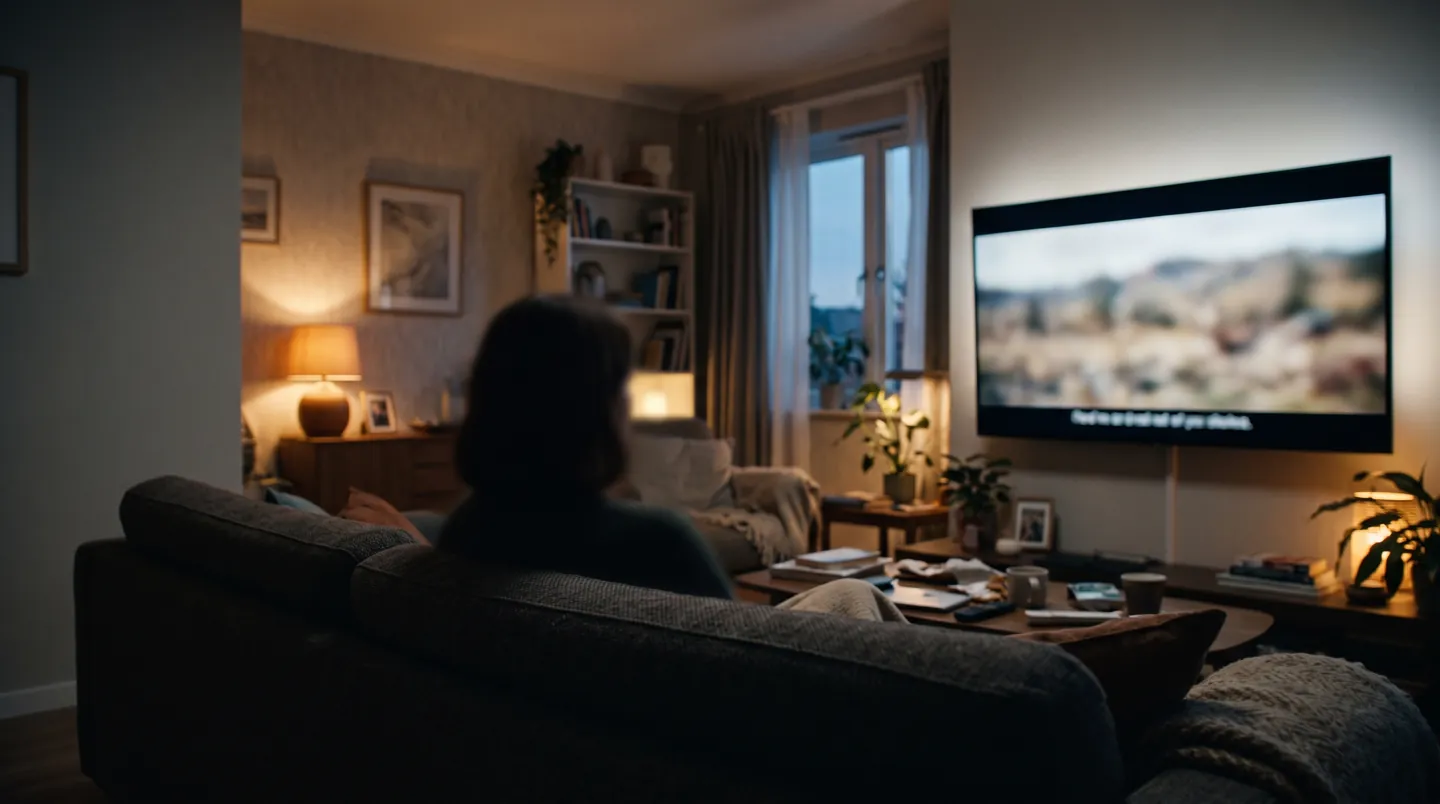
 doodleonscreen
HOW SUBTITLES WORK
160-180 words a minute
Subtitles follow careful rules.
How long each line stays up, which colour a speaker gets and how much of the speech is kept are all set out in guidelines. The BBC's guide and Ofcom's code shape what you see on UK television.
Updated
Check a sceneTHE SHORT ANSWER
The BBC Subtitle Guidelines bring together
earlier Ofcom and BBC guidance in one place.
COLOUR
Most subtitles are white text on a black background for legibility. Speakers are told apart by colour: white, yellow, cyan, then green. By convention the narrator is yellow.
Try the scene checkTIMING
The recommended speed is 160-180 words a minute, about a third of a second per word. Subtitles should never appear more than 2 seconds after the words are spoken.
See the numbersWHO USES THEM
Ofcom research found about 7.5 million people had used subtitles to watch television, and about 6 million of them did not have a hearing impairment.
The rules for channelsA QUICK SCENE CHECK
Pick a kind of scene to see how closely the BBC guidelines say the subtitles should follow the spoken words. The bar shows how much editing is expected.
Based on the BBC Subtitle Guidelines. Subtitlers use judgement too: the guidelines say no set of hard rules can cover every situation.
TWO NUMBERS WORTH KNOWING
One figure on who switches subtitles on,
one on how fast they are written to run.
≈ 6 million
Subtitle users with no hearing impairment
Research for Ofcom's 2006 review found about 7.5 million people had used subtitles to watch television, of whom about 6 million did not have a hearing impairment.
WHO USES THEM · OFCOM
160–180 wpm
Recommended subtitle speed
The BBC recommends 160-180 words per minute, or 0.33 to 0.375 seconds per word, adjusted to the pace of the programme because viewers tend to prefer verbatim subtitles.
READING SPEED · BBC
The BBC guidelines also limit line length: 37 characters on Teletext, and 68% of the width of a landscape 16:9 video online.
FOUR THINGS TO NOTICE

Next time you switch subtitles on, look for the rules at work. Each one is there to make the words quicker to read.
A yellow line usually means the narrator. Different colours mark different speakers, and each keeps the same colour throughout.
When two speakers share a colour, each new speaker starts a new line with a dash.
Many subtitles start on the first frame of a shot and end on its last, which is less tiring to read.
A > or < marks a speaker who is out of shot, pointing the way their voice is coming from.
WHAT CHANNELS MUST DO
The Communications Act 2003 sets ten-year targets for TV access services: subtitling for 80% of programme hours, audio description for 10% and signing for 5%, with a five-year subtitling target of 60%.
Ofcom's code sets higher ten-year subtitling targets for Channel 3 and Channel 4, at 90%, and under the BBC Agreement BBC channels must meet the highest target of all: 100%. Ofcom says 81 channels will have to provide access services in 2027.
Questions
The BBC Subtitle Guidelines say most subtitles are white text on a black background to ensure the best legibility. Other colours used for speakers must also sit on black.
Colours tell speakers apart. In order of priority they are white, yellow, cyan and green, and by convention the narrator is shown in yellow.
The BBC recommends 160-180 words per minute, which is 0.33 to 0.375 seconds per word, adjusted to the pace of the programme. Faster speech is usually edited down.
Research for Ofcom in 2006 found about 7.5 million people had used subtitles to watch TV. About 6 million of them did not have a hearing impairment.
Under the Communications Act 2003 and Ofcom's code, the ten-year target is 80% of programme hours for most channels, 90% for Channel 3 and Channel 4, and 100% for BBC channels.
Sources
ABOUT THIS NAME
doodleonscreen.com is part of the DoodleSale portfolio. It isn't in an auction right now, but you can ask about leasing it.